Why Your Nail Appointment Is Getting Harder to Book—And What's Really Behind It
You open the app, pick your usual time slot, and get hit with the same message you've been seeing more and more often: no availability this week. Or the next. You call the salon and find out your favorite technician isn't there anymore—left for another location, or left the industry altogether. You wait three weeks for a slot that used to take three minutes to book.
This isn't a fluke. It's a pattern. And it's connected to a set of systemic challenges that have been quietly building inside the nail salon industry for years—challenges that deserve more than a frustrated sigh from the waiting room.
The Staffing Crunch Is Real
Nail salons across the United States are struggling to maintain consistent staffing. The workforce that built this industry—largely Vietnamese American women who transformed American nail culture starting in the 1970s and 80s—is aging, and the pipeline of new technicians entering the field hasn't kept pace with demand.
According to industry observers, the pandemic accelerated what was already a slow-moving crisis. Many experienced nail techs left the profession during COVID-era shutdowns and never came back. Some transitioned to other work. Others retired. A few launched their own independent businesses—which is great for them, but it further fragments the workforce that established salons depend on.
Meanwhile, demand for nail services has only grown. The nail art boom of the early 2020s, fueled by social media and the rise of nail content creators, brought an entirely new generation of clients into salons. More demand, fewer hands to meet it. The math isn't working in anyone's favor.
Burnout Is a Bigger Problem Than You Might Realize
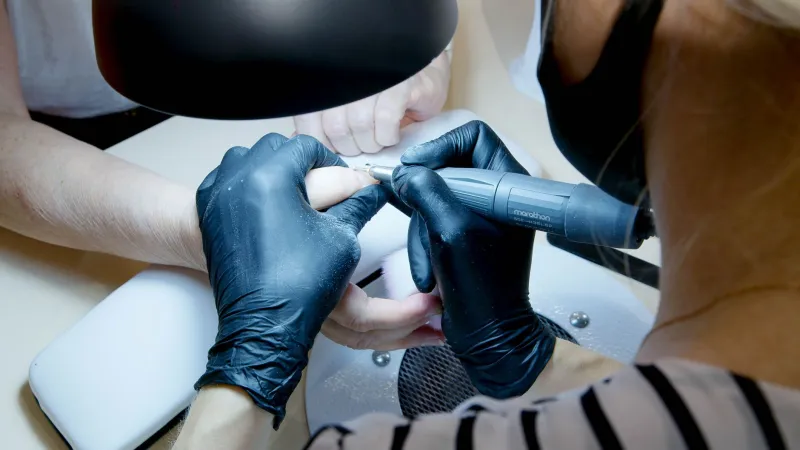
Nail technology is physically demanding work. Technicians sit in fixed positions for hours, work with chemical products that can affect respiratory health and skin, and deal with the emotional labor of client-facing service day after day. The ergonomic toll alone—on backs, necks, wrists, and eyes—is significant.
When salons are understaffed, the technicians who remain absorb the extra load. More back-to-back appointments. Fewer breaks. Higher pressure to keep the schedule moving without compromising quality. That's a direct path to burnout, and burnout is exactly what's driving more experienced techs out of the industry.
One nail artist in the Chicago area described it this way: "I love this work. I genuinely love it. But there are weeks where I do eight clients a day with no real break, and by Friday I can barely open my hands. That's not sustainable."
When your favorite tech burns out and leaves, that's not just an inconvenience for your booking schedule. It's a loss of expertise, of relationship, of the specific skill set that made your appointments feel special.
Immigration Policy and the Workforce Pipeline
This part of the conversation is uncomfortable for some people, but it's important. The nail salon industry in the US has historically relied heavily on immigrant labor, particularly from Vietnam. Tightening immigration policies, increased enforcement, and longer visa processing times have all contributed to a slower influx of new workers entering the trade.
Many nail technicians came to the US through community networks—family members who were already in the industry, cultural connections that created pathways into the profession. As those pathways have narrowed, the natural replenishment of the workforce has slowed.
This isn't a political argument in either direction. It's simply a structural reality that affects the industry's ability to train and retain new talent at the rate needed to keep up with client demand.
The Wage and Compensation Gap
Here's something that doesn't get discussed enough in beauty media: nail technicians are frequently underpaid relative to the skill level their work requires. A nail tech who can execute intricate 3D art, perfect gel application, and nail health assessments has a highly specialized skill set—one that takes years to develop. But compensation structures in many salons don't reflect that.
Many technicians are still paid on commission-based models that make income unpredictable, especially in slow seasons. Tips, while appreciated, are not a reliable substitute for fair base wages. When skilled workers can earn more—with less physical strain—in other beauty or service industries, the decision to leave nail work becomes easier to make.
As a client, this is worth knowing. When you tip generously, show up on time, and don't cancel last-minute, you're not just being polite. You're directly contributing to the financial stability of someone whose livelihood is genuinely precarious.
What This Means for Your Manicure Experience
The downstream effects of these systemic pressures show up in your booking experience in concrete ways:
- Longer wait times for appointments, especially at popular salons
- Higher prices as salons try to compensate for reduced staff capacity and rising supply costs
- Inconsistent quality when salons rely on less experienced techs to fill gaps
- Shorter appointment windows as techs are pushed to move faster through their books
- Fewer specialty services because complex nail art requires technicians with advanced training that's harder to find
None of this is the fault of the salon owner trying to keep the lights on, or the tech doing her best with a packed schedule. It's a systemic problem that requires industry-wide solutions.
How You Can Help Stabilize the Industry
This might sound like an odd thing to ask of a nail client, but your behavior genuinely matters at this scale. Here's what actually helps:
Book and keep your appointments. Last-minute cancellations hurt small salons disproportionately. That slot often can't be filled, and the tech loses income she was counting on.
Tip consistently and generously. Twenty percent is standard. For complex nail art, more is appropriate. This isn't charity—it's fair compensation for skilled labor.
Build a relationship with your nail tech. Loyalty matters. When clients stick with specific technicians, it creates stability and gives those techs a reason to stay at a salon.
Advocate for the industry. Support local salons over discount chains when you can. Talk about the value of skilled nail work in your community. These conversations shape how people think about nail care as a profession.
Be patient. If your favorite salon is short-staffed, the people working there are doing their best under real pressure. Patience and grace go a long way.
The nail industry has given a lot of us a place to feel beautiful, cared for, and creative. The least we can do is show up for it—thoughtfully, generously, and with a little more understanding of what's happening on the other side of the nail table.