When the Polish Wears Off: Are Your Nail Appointments Healing You or Hiding Something?
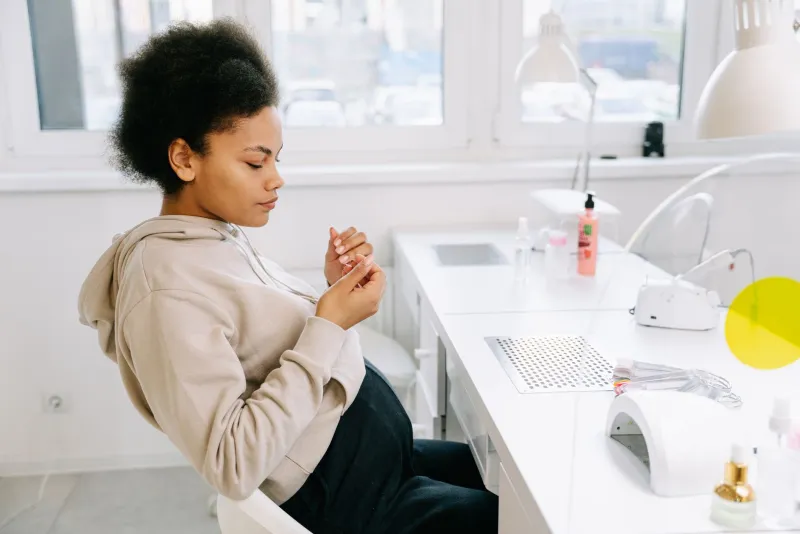
Let's be honest for a second. How many times have you booked a nail appointment not because your gel was lifting, but because your life felt like it was? A rough week at work, a relationship that's quietly unraveling, a season of change that nobody warned you would feel this disorienting — and suddenly you're scrolling through inspo boards and texting your nail tech like she holds the answer to everything.
Maybe she kind of does. But maybe she doesn't.
There's something genuinely beautiful about the ritual of getting your nails done. The warmth of the lamp, the focused attention, the transformation that happens right at your fingertips — it's real, and it matters. But there's a version of that ritual that tips from nourishing into numbing, and it's worth knowing the difference.
The Comfort of the Chair
Psychologists have long recognized that routine rituals carry emotional weight. When life feels chaotic, predictable experiences — a favorite coffee order, a weekly workout, a standing nail appointment — create a sense of control. You walked in with chipped nails and a racing mind. You walked out with something that looks, at least, like you have it together.
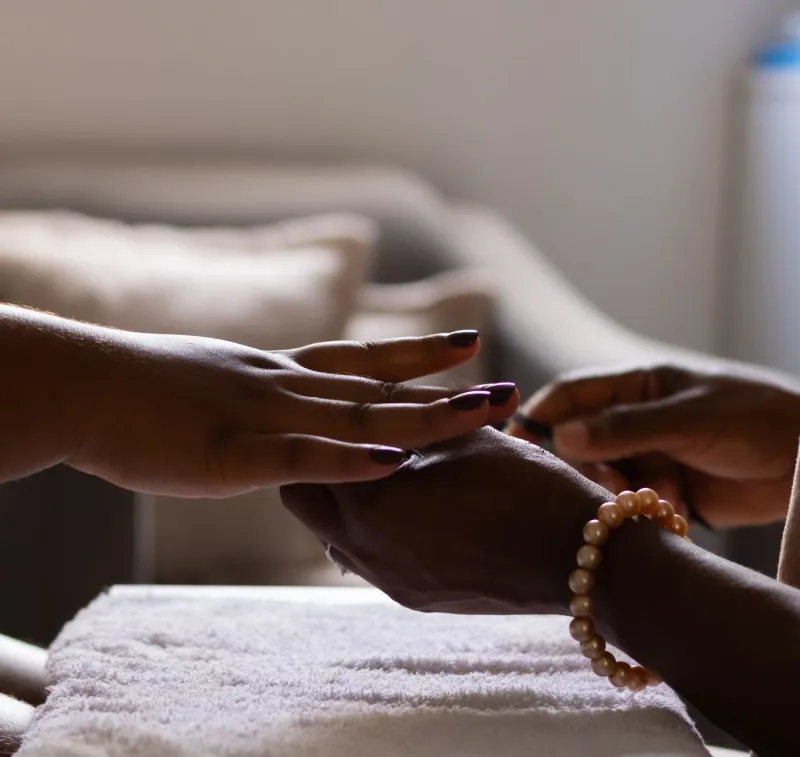
That's not nothing. In fact, for a lot of people, the nail salon genuinely functions as a low-stakes space for decompression. You're not expected to talk about your feelings. You're not on your phone (well, mostly). You're just... sitting. Breathing. Watching someone turn your hands into something worth looking at.
Licensed therapist and wellness writer Dana Hollis, who works with clients in New York and virtually across the US, describes it this way: "There's real therapeutic value in rituals that anchor you to your body. Nail care, when it's intentional, can be a form of somatic grounding — you're present, you're being cared for, and you're creating something tangible." She's quick to add the caveat, though. "The problem comes when the appointment becomes the only tool in the box."
The Paradox Nobody Talks About
Here's where it gets a little uncomfortable. The same qualities that make a manicure soothing — it's finite, it's aesthetic, it produces an immediate visible result — can also make it the perfect escape hatch from things that require the opposite of all that.
Grief isn't finite. Anxiety doesn't produce visible results. A difficult conversation doesn't wrap up in 60 minutes with a glossy top coat.
When clients come in during major life transitions — a divorce, a job loss, a move across the country — nail techs often notice a pattern. Bookings increase. Designs get more elaborate. The requests shift from "something simple" to "I want something that makes me feel like a completely different person."
That's a signal worth paying attention to.
Sarah, a 34-year-old teacher from Chicago who asked us not to use her last name, described going through her mother's illness last year. "I was getting my nails done every two weeks, sometimes every ten days. I told myself it was self-care. And honestly? It was, a little. But mostly I was just... not thinking about it for an hour. The minute I walked out, everything was still there." She eventually started therapy, and looking back, she sees her nail habit clearly: "It was comfort. It wasn't healing."
So When IS It Actually Self-Care?
This isn't an argument against manicures. Not even close. The distinction between genuine self-care and avoidance isn't about what you're doing — it's about why, and what else you're doing alongside it.
A nail appointment is part of a healthy wellness toolkit when:
It's intentional, not impulsive. You planned it because you wanted it, not because you needed to escape something you couldn't name.
It complements other coping strategies. You're also talking to someone, moving your body, sleeping, eating, or doing whatever else helps you process your actual life.
You feel genuinely better afterward — not just distracted. There's a difference between the calm that comes from being present and cared for, and the temporary numbness that fades the moment you hit the parking lot.
You can go without it. If skipping an appointment feels genuinely anxiety-inducing — not just disappointing — that's worth noticing.
The goal isn't to strip away the things that bring you joy. It's to make sure those things are building you up rather than papering over cracks.
What Your Nail Tech Might Already Know
Here's something the beauty industry doesn't say enough: nail technicians are often the most emotionally attuned people in the wellness space, even without a clinical title. They see their clients consistently, in close physical proximity, through every season of life. They notice when someone's hands are trembling. They hear the things clients say — and the things they don't.
Many nail techs describe their role as part artist, part confidante. But the good ones will also tell you they're not equipped to be anyone's therapist, and they wouldn't want to be. The relationship works best when it's what it is: a skilled professional creating something beautiful for you, in a space that happens to feel safe.
If you find yourself processing major emotional weight in the nail chair week after week, the kindest thing you can do for yourself — and honestly, for your tech — is to bring in some reinforcements. A therapist. A trusted friend. A journaling practice. Something that can hold the heavier stuff.
Nails as Part of the Whole Picture
At Jessabella Nails, we believe in beauty that goes all the way down — not just a pretty set that masks what's happening underneath. Nail art can be joyful, expressive, even transformative. A fresh manicure before a big interview or a first date? Absolutely a power move. A color that makes you smile every time you glance at your hands? That's real.
But the most beautiful nails in the world can't fix a broken sleep schedule, a relationship that needs honesty, or grief that hasn't been given space to breathe.
So the next time you're reaching for your phone to book an appointment, take one honest breath first. Are you treating yourself — or escaping yourself? Both are human. Only one is sustainable.
Book the appointment either way, if you want. Just maybe also book the other thing.